



Building in Public: A Founder's Playbook for 2026
Building in public means sharing the real story of building your startup — the wins, failures, metrics, and decisions — as you go. It's the opposite of stealth mode, and it's become one of the most effective marketing strategies for early-stage founders.
The concept isn't new. Buffer famously opened its revenue dashboard in 2013. But building in public has surged in popularity over the past few years, particularly among indie hackers and SaaS founders on X (Twitter), LinkedIn, and Reddit. Search interest for "building in public" has been climbing steadily, particularly among indie hackers and SaaS founders on X, LinkedIn, and Reddit — driven by founders who've used it to build audiences, attract early adopters, and even raise funding.
Here's the problem: most advice about building in public boils down to "just be transparent." That's not a strategy. This guide gives you a systematic playbook — what to share, what to keep private, where to post, how often, and how to turn attention into actual business results.
Why Building in Public Works
Building in public isn't just about being open for the sake of it. It drives specific business outcomes:
Trust before product. When people follow your journey, they develop trust before you ever ask them to buy. By the time you launch, your audience isn't hearing about you for the first time — they've been invested in your story for weeks or months.
Free product validation. Every update you share is an opportunity for feedback. Post about a feature you're building and your audience will tell you if it solves their problem — before you've shipped it.
Organic distribution. People love following real stories. A founder sharing honest revenue numbers or a painful pivot gets more engagement than polished marketing content. That engagement translates to reach you can't buy.
Accountability. Public commitments create pressure to deliver. When you tell 500 followers you'll launch by Friday, you launch by Friday.
Hiring and partnerships. Talented people want to work with founders they know and respect. Building in public makes you visible to potential co-founders, employees, advisors, and investors.
What to Share (and What to Keep Private)
The biggest fear founders have about building in public is sharing too much. Here's a practical framework for deciding what's worth sharing and what should stay internal.
Share Freely
| Content Type | Example | Why It Works |
|---|---|---|
| Metrics and milestones | "$500 MRR!", "First 100 users" | Concrete proof of progress, very shareable |
| Lessons learned | "We changed our pricing and here's what happened" | Teaches others, positions you as thoughtful |
| Behind-the-scenes | "Here's how we designed our onboarding flow" | Satisfies curiosity, shows craftsmanship |
| Struggles and failures | "We lost 30% of users after our last update" | Builds trust through vulnerability |
| Decisions and reasoning | "Why we chose Stripe over PayPal" | Helps others, demonstrates strategic thinking |
| Weekly/monthly updates | Revenue, user count, key wins, next goals | Consistent content, creates a narrative arc |
Keep Private
| Content Type | Why |
|---|---|
| Specific customer data | Privacy and trust obligations |
| Unreleased security vulnerabilities | Liability and safety |
| Internal team conflicts | Professionalism; resolve internally |
| Exact competitive strategy details | Protect your advantage |
| Investor-sensitive financial details | Legal and relationship obligations |
The general rule: share the "what" and "why" generously. Be selective about the "how" when it could be directly copied by competitors. In practice, most startups overestimate how much competitors will copy and underestimate how much audiences appreciate honesty.
Where to Build in Public
Not every platform works equally well. Choose based on where your target audience spends time.
X (Twitter)
Best for: Tech startups, SaaS, indie hackers, developer tools
X remains the primary platform for building in public. The founder community is large and active, hashtags like #buildinpublic have engaged followings, and the short-form format encourages frequent updates.
What works: Thread breakdowns of decisions, screenshot-style metric updates, quick takes on lessons learned. Posts with specific numbers ("$2,000 MRR after 4 months") consistently outperform vague updates.
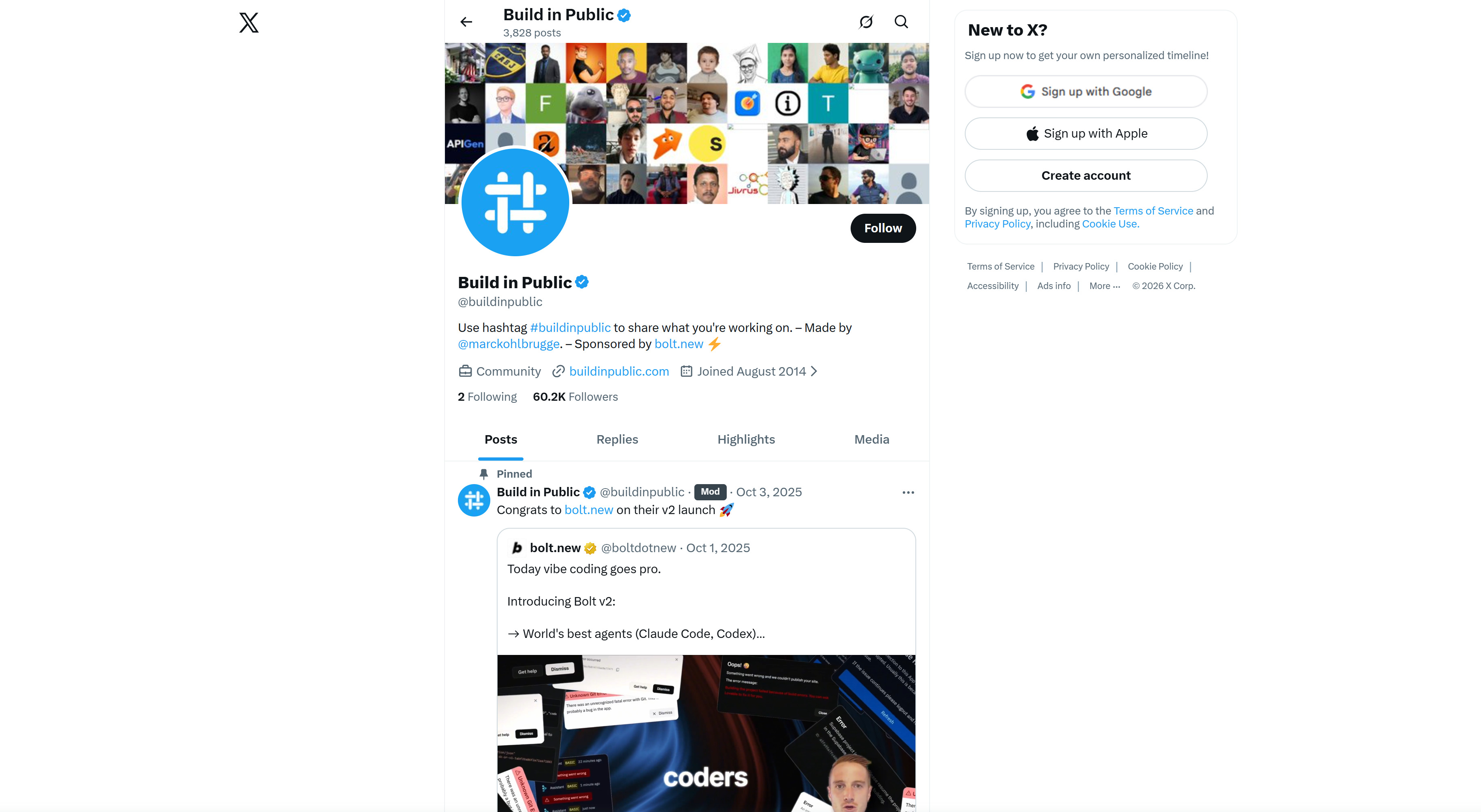
Image credit: X
Best for: B2B startups, professional services, enterprise SaaS
LinkedIn's algorithm currently favors personal stories and long-form posts. Building in public content performs well here because it stands out from the corporate content that dominates most feeds.
What works: Longer narrative posts (1,200-1,500 characters), professional framing of startup lessons, milestone announcements. LinkedIn audiences respond well to "here's what I learned" content.
Image credit: LinkedIn
Best for: Niche communities, product validation, honest feedback
Reddit communities like r/SaaS, r/startups, r/Entrepreneur, and r/indiehackers are ideal for sharing updates and getting blunt feedback. The culture rewards honesty and punishes self-promotion.
What works: Monthly update posts with real numbers, specific questions about challenges you're facing, detailed post-mortems on things that didn't work. For a deeper strategy on using Reddit effectively, see our Reddit lead generation guide.
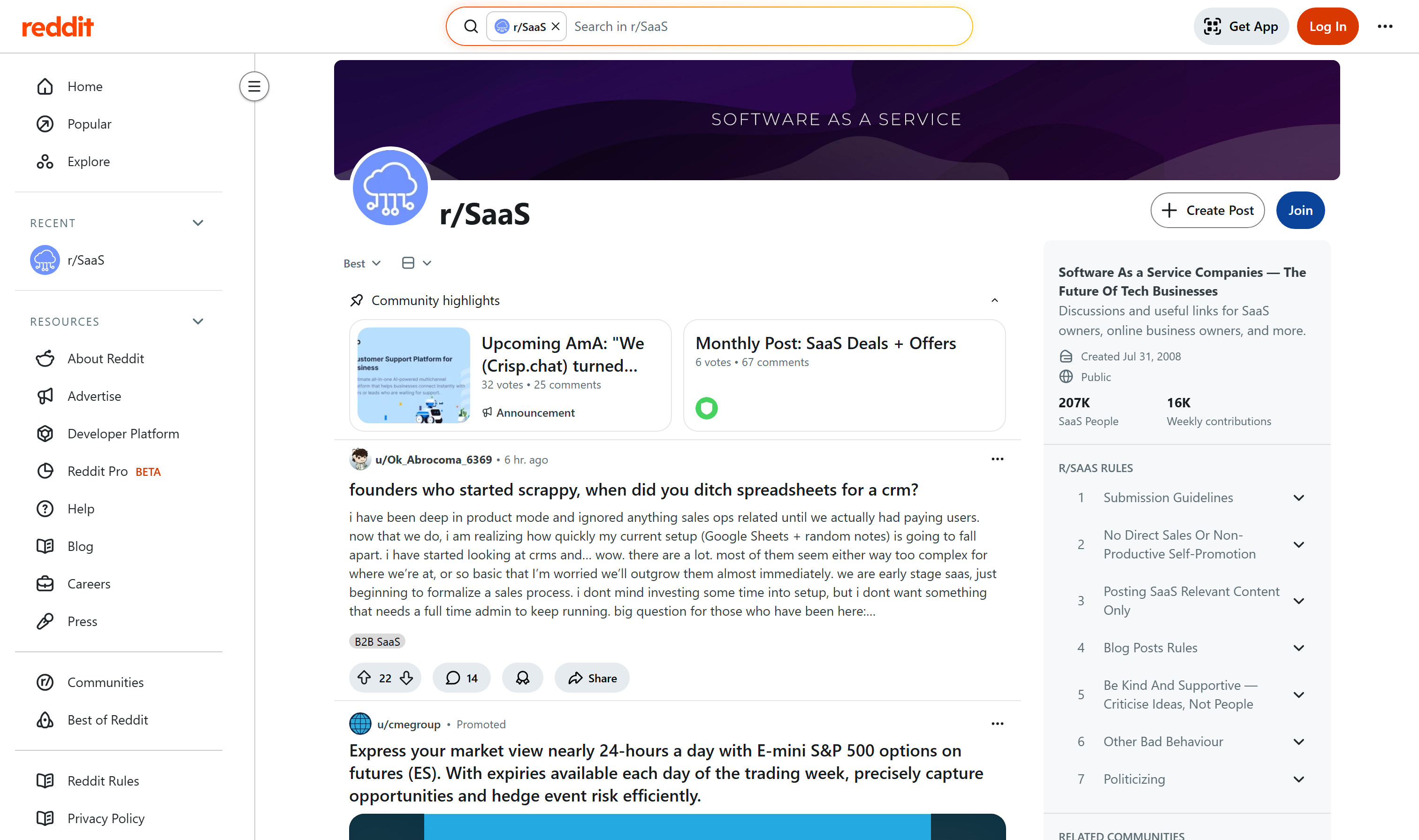
Image credit: Reddit
Your Own Blog or Newsletter
Best for: Long-form updates, SEO, building an owned audience
Social media platforms give you reach, but you don't own the audience. A blog or newsletter gives you a direct channel to your followers that no algorithm can take away.
What works: Monthly recap posts, detailed case studies, transparent revenue reports. These posts also rank in search engines and drive organic traffic long after you publish them.
The Weekly Content Framework
Consistency is what separates founders who build an audience from those who post once and disappear. Here's a simple weekly framework that takes about 2-3 hours per week:
Monday: Goal Setting
Share your goals for the week. Keep it specific: "This week: launch landing page v2, reach out to 10 beta testers, fix the checkout bug." Public goals create accountability and give your audience something to track.
Wednesday: Behind-the-Scenes
Share a work-in-progress screenshot, a decision you're wrestling with, or a lesson from the past few days. Mid-week content keeps you visible and gives the audience a reason to stay engaged between milestones.
Friday: Weekly Recap
Summarize what you accomplished, what you didn't, and what you learned. Include a metric if possible (even small ones — "3 new sign-ups this week"). The recap creates a narrative thread that followers can track over time.
Monthly: Deep Dive
Once a month, write a longer update — a blog post or newsletter — covering the full month's progress. Include revenue (if comfortable), user growth, key decisions, and plans for next month. These posts get the most engagement and are the most shareable.
Total weekly time commitment: 2-3 hours. That's 30 minutes on Monday, 30 minutes on Wednesday, 30 minutes on Friday, and 1-2 hours for the monthly deep dive. This is manageable even for solo founders building a product full-time.
How to Start When You Have Zero Followers
The most common objection to building in public: "I don't have an audience yet." Here's how to build from zero:
Start before you're ready. You don't need 1,000 followers to begin. Your first 10 posts won't go viral — and that's fine. Building in public is a compounding strategy. The posts you write in month 1 set the foundation for the audience you build in month 6.
Engage with others first. Before expecting people to follow your journey, follow and engage with other founders who are building in public. Comment on their updates, share their content, offer genuine feedback. Communities are reciprocal.
Be specific, not generic. "Working on my startup today!" gets zero engagement. "$347 in revenue this month from 12 paying users — here's what's working" gets attention. Specificity is the currency of building in public.
Use hashtags and communities. On X, use #buildinpublic and related hashtags. On Reddit, post in relevant subreddits. On LinkedIn, engage in founder-focused groups. These surfaces help people discover your content.
Batch your content. If daily posting feels overwhelming, write 3-5 posts on Sunday and schedule them throughout the week. Tools like Buffer (free tier) or Typefully can handle scheduling.
Measuring Results
Building in public is a marketing strategy, and marketing strategies need metrics. Track these to understand if it's working:
| Metric | What It Measures | Tool |
|---|---|---|
| Follower growth | Audience size over time | Platform analytics |
| Engagement rate | How much people interact | Platform analytics |
| Website traffic from social | Direct business impact | Google Analytics (referral source) |
| Sign-ups attributed to social | Conversion from audience to users | UTM parameters + analytics |
| DMs and inbound leads | High-intent interest | Manual tracking |
| Content performance by type | What resonates most | Track per-post engagement |
Set a 90-day experiment. Commit to the weekly framework for 3 months and measure the results. Most founders see meaningful traction between month 2 and 3 — not day 1. If after 90 days you're seeing growth in followers, engagement, and website traffic, scale up. If not, adjust your content mix or platform.
Common Mistakes
- Being too polished. Building in public works because it's real. Overly edited, corporate-style posts defeat the purpose. Rough screenshots and honest numbers outperform graphic-designed updates.
- Only sharing wins. An account that only posts "We hit $10K MRR!" without ever sharing struggles feels inauthentic. The audience connects with the full story — the setbacks make the wins meaningful.
- Inconsistency. Posting every day for a week, then disappearing for a month, kills momentum. A steady rhythm of 3 posts per week beats 20 posts in one burst.
- Making every post about your product. Building in public isn't content marketing for your product. It's sharing the journey of building a company. The product is part of the story, not the whole story.
- Ignoring engagement. When someone comments on your update, respond. Building in public is a two-way conversation. The founders who build the strongest audiences are the ones who actively engage with their followers.
Key Takeaways
- Building in public is a systematic marketing strategy, not just "being transparent on social media." Treat it with the same rigor as SEO or paid ads.
- Follow the weekly framework: goals on Monday, behind-the-scenes on Wednesday, recap on Friday, deep dive monthly. This takes 2-3 hours per week.
- Share metrics, decisions, and failures generously. Keep customer data and competitive strategy details private. Most founders share too little, not too much.
- Choose 1-2 platforms based on your audience. X for tech/SaaS, LinkedIn for B2B, Reddit for honest feedback, your own blog for long-form and SEO.
- Start with zero followers and commit for 90 days. Building in public compounds — the audience you build in month 3 is built on the foundation you laid in month 1.
- Measure business impact, not vanity metrics. Website traffic, sign-ups, and inbound leads matter more than follower count.