



7 AI Tools for Market Research That Startups Can Afford
Market research used to mean months of surveys, focus groups, and expensive consultants. For a startup founder trying to understand their market, that's not realistic. You need answers fast, and you need them cheap.
That's where AI tools for market research come in. These platforms use machine learning and natural language processing to automate tasks like competitor analysis, audience insights, trend tracking, and sentiment analysis — work that used to require a dedicated research team.
But most "best AI market research tools" lists feature enterprise platforms with pricing that starts at $500+ per month. That doesn't help a bootstrapped startup. This guide focuses on 7 AI tools for market research that offer meaningful free plans or affordable pricing under $200 per month, organized by what you're actually trying to accomplish.
How Startups Use AI for Market Research
Before diving into tools, it helps to understand the core market research tasks where AI adds the most value for startups:
| Research Task | What AI Does | Why It Matters for Startups |
|---|---|---|
| Competitor analysis | Tracks competitor content, pricing, and positioning | Helps you differentiate without manual monitoring |
| Audience insights | Analyzes who your customers are and what they want | Validates product-market fit faster |
| Trend discovery | Identifies emerging topics and demand shifts | Spots opportunities before competitors |
| Sentiment analysis | Reads reviews, social posts, and forums at scale | Understands how people feel about your market |
| Survey analysis | Processes open-ended responses automatically | Saves hours of manual coding |
Most startups don't need all five on day one. Pick the research task that's most critical to your current stage and start with one tool.
Competitor Analysis
1. Crayon — Best for Tracking Competitor Moves
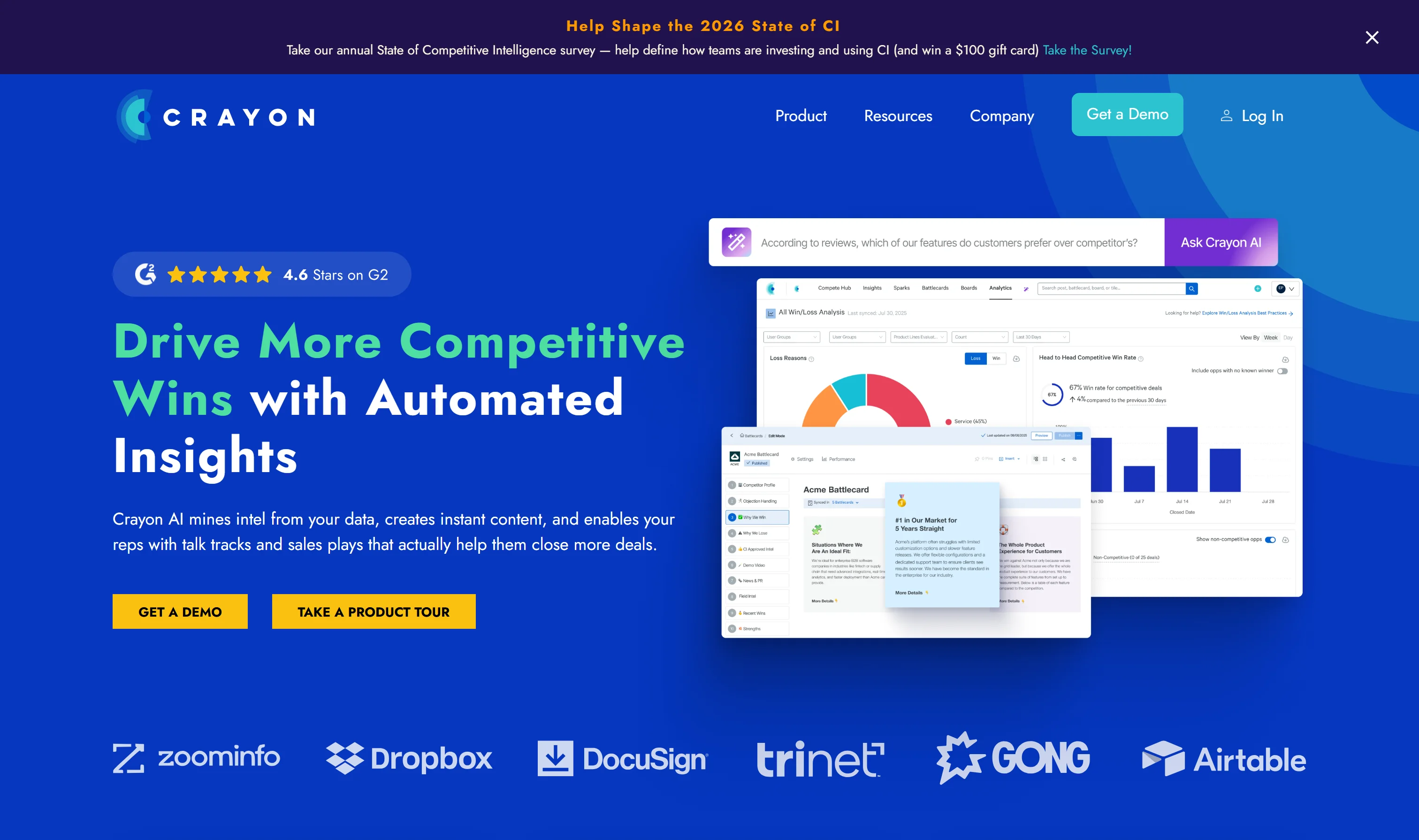
Crayon monitors your competitors' websites, content, pricing pages, and job postings to surface changes automatically. It uses AI to flag the most important updates so you're not drowning in noise.
What it does well: Crayon captures competitor changes across dozens of digital channels — from homepage redesigns to new blog posts to pricing adjustments. Its AI prioritizes what matters, so you see strategic shifts rather than trivial edits.
Free plan limits: Crayon doesn't offer a free tier. Pricing is custom and typically starts at enterprise levels. However, they offer free competitive analysis reports on their site, which can be useful for one-off research.
Best for: Startups in competitive SaaS markets where tracking competitor positioning is critical.
Startup-friendly alternative: If Crayon is too expensive, use Google Alerts (free) to monitor competitor brand mentions and Visualping (free tier) to track website changes.
2. SparkToro — Best for Audience Research
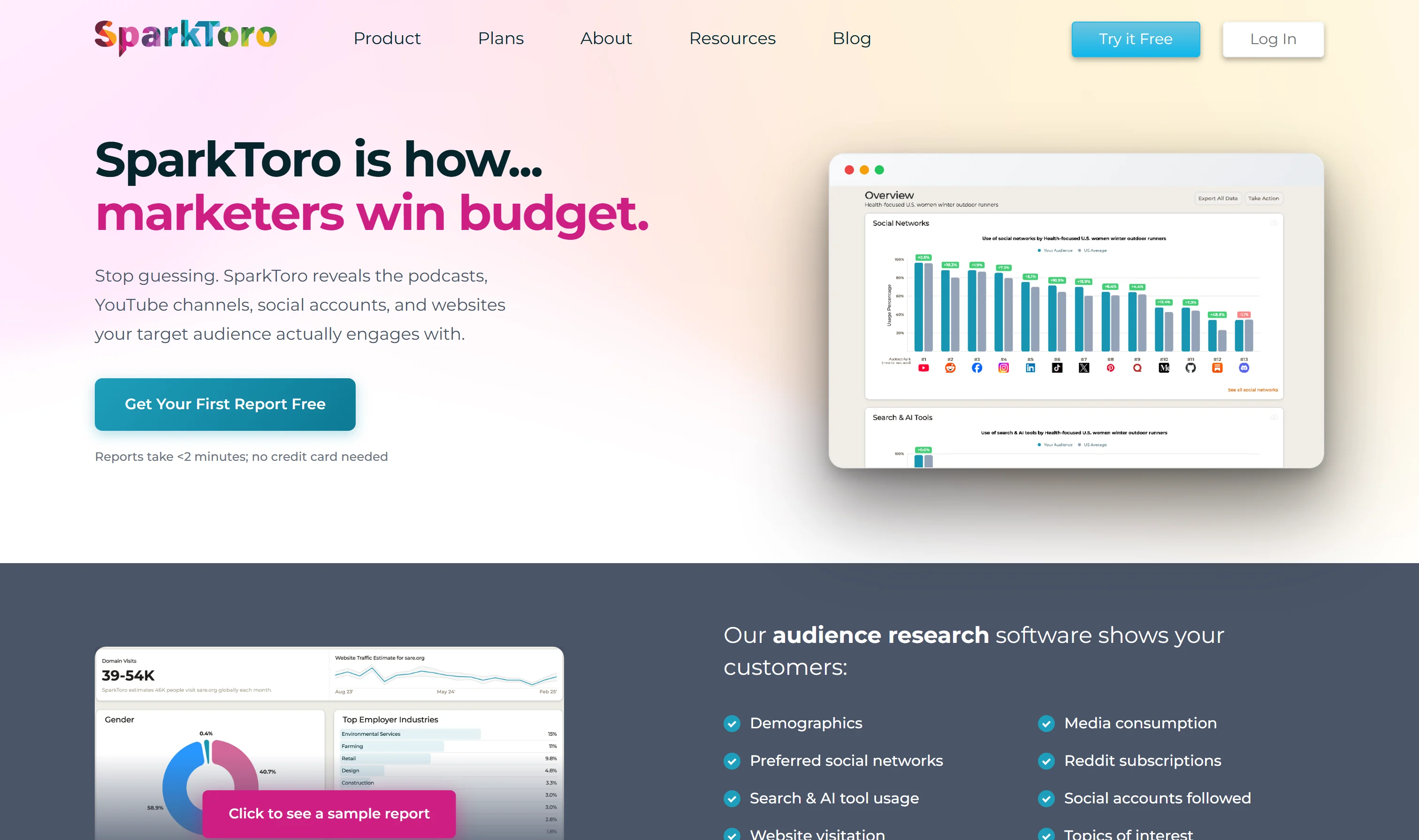
SparkToro analyzes where your target audience spends time online — which websites they visit, podcasts they listen to, social accounts they follow, and subreddits they browse. It answers the question "where do my potential customers hang out?"
What it does well: Type in a keyword, website, or social account, and SparkToro shows you detailed audience demographics, top media sources, and behavioral data. For startups, this is invaluable for choosing marketing channels and content topics.
Pricing: Free plan includes 5 searches per month. Paid plans start at $50/month with 50 searches.
Free plan limits: Five searches per month is tight but enough for initial research. Each search provides substantial data.
Best for: Early-stage startups trying to figure out where to focus their marketing efforts. Also useful for validating audience assumptions before launching campaigns.
Trend Discovery
3. Exploding Topics — Best for Spotting Emerging Trends
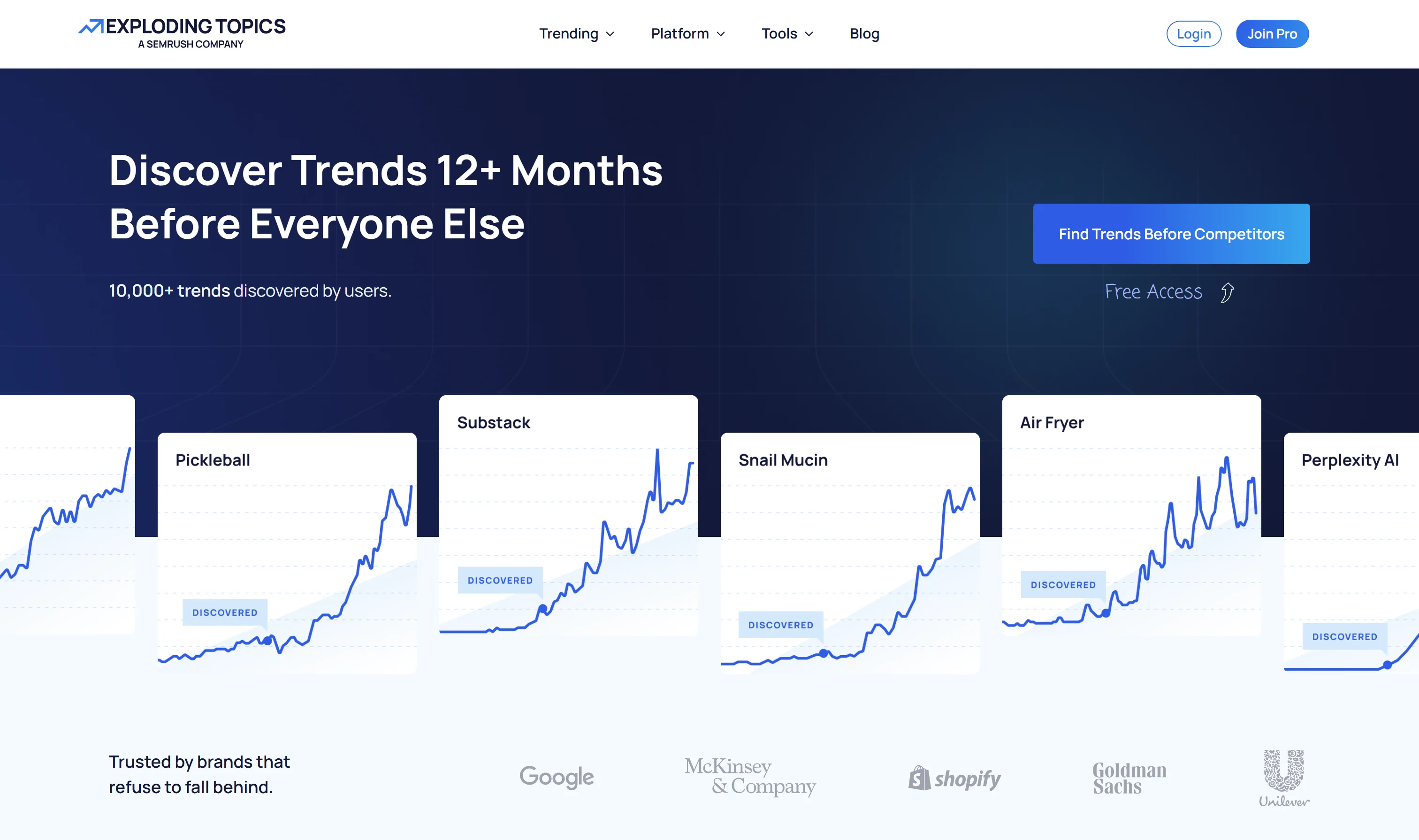
Exploding Topics uses AI to scan millions of online conversations, searches, and mentions to identify topics and products that are growing rapidly before they hit the mainstream.
What it does well: It surfaces emerging trends with growth trajectory data, so you can see not just what's trending now but what's likely to keep growing. This is useful for content planning, product decisions, and identifying new market opportunities.
Pricing: Free plan gives limited access to trend data. Pro plan starts at $39/month with full trend database, trend tracking, and weekly reports.
Free plan limits: The free version shows some trends but without historical data or filtering. Enough for a quick scan, not for systematic research.
Best for: Content marketers and product teams looking for topics to write about or features to build based on growing demand.
4. Google Trends — Best Free Option for Market Validation
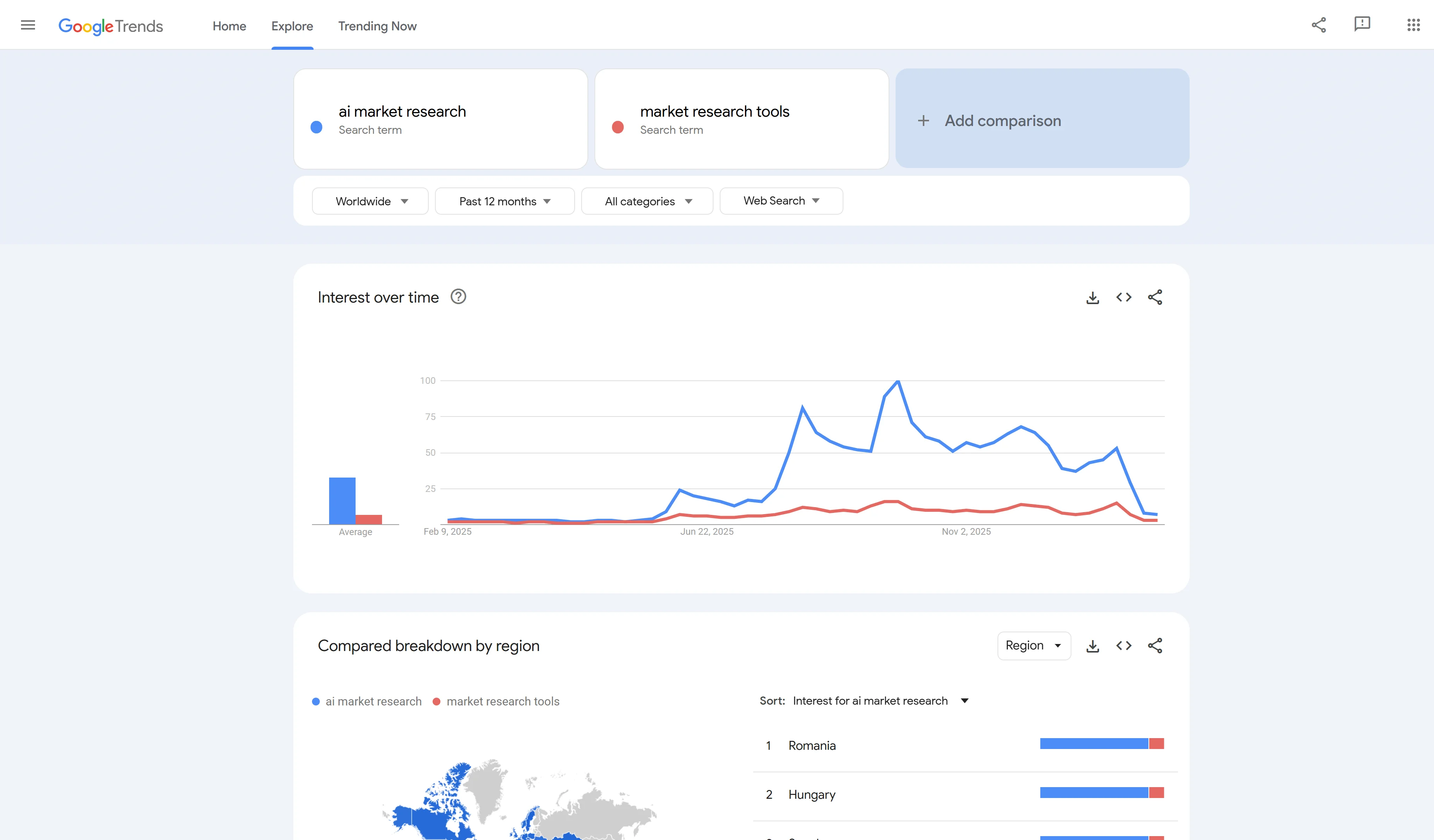
Google Trends is completely free and powered by Google's actual search data. It shows how search interest for any topic has changed over time and lets you compare multiple terms head-to-head.
What it does well: Validates whether interest in your market is growing or declining, compares brand or product search volume, and reveals geographic and seasonal patterns. For a free tool, the data is remarkably actionable.
Pricing: Completely free. No account required.
Limitations: It shows relative interest (not absolute search volume), doesn't provide competitor-specific intelligence, and the data can be noisy for very niche terms.
Best for: Every startup should use Google Trends before launching a product or entering a new market. It takes 5 minutes and costs nothing.
Sentiment and Social Listening
5. Brandwatch — Best for Enterprise-Level Social Listening
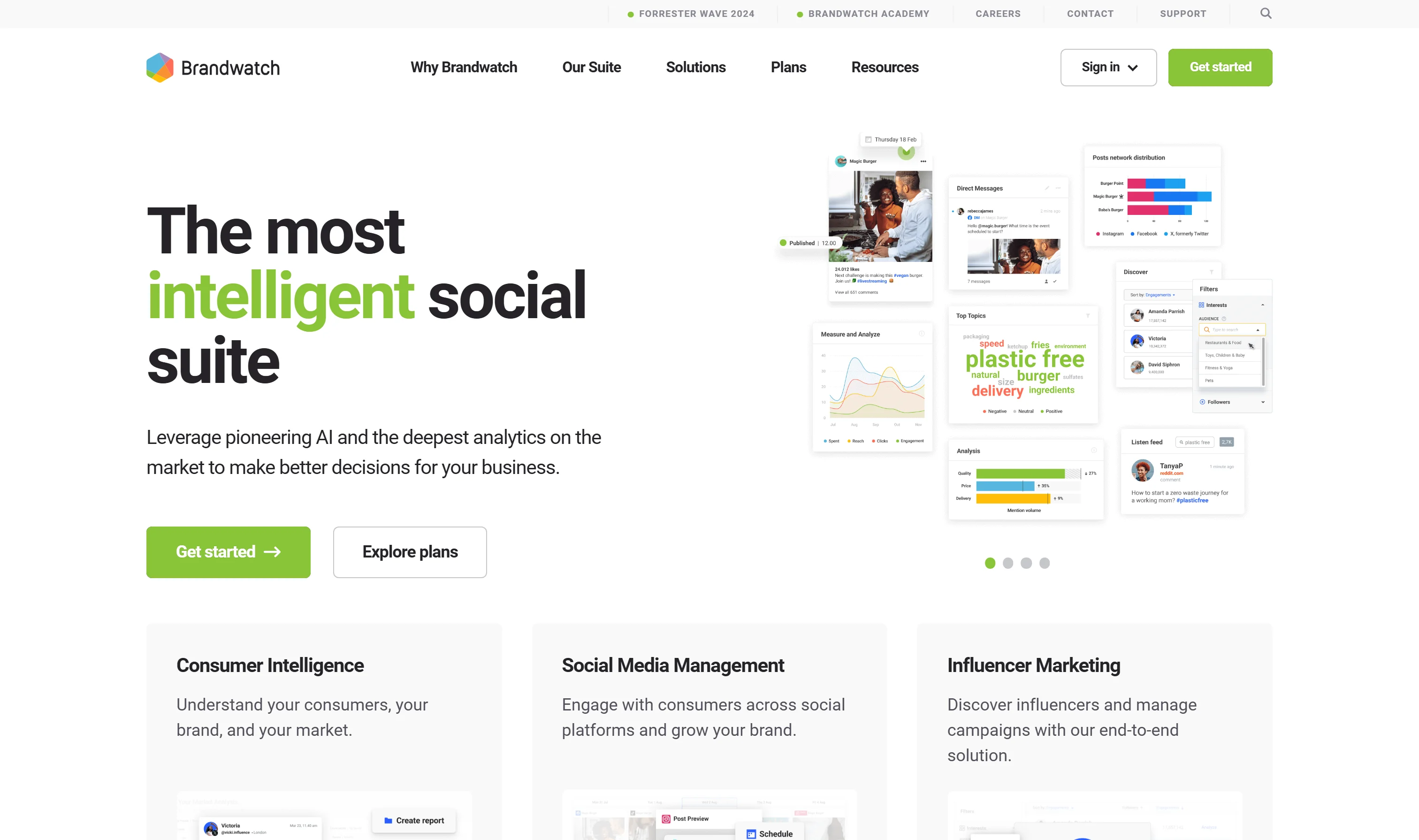
Brandwatch is the industry leader in social listening and sentiment analysis. It monitors conversations across social media, forums, news sites, and review platforms, then uses AI to classify sentiment and extract themes.
What it does well: Unmatched data coverage. Brandwatch tracks conversations in real time across nearly every public online source, including Reddit, X, podcasts, and review sites. Its AI analytics go deep — topic clustering, emotional analysis, and trend forecasting.
Pricing: Custom pricing; typically starts above $800/month. Not budget-friendly for most startups.
Startup-friendly alternative: For startups that need social listening on a budget, consider these options:
| Tool | What It Does | Free Plan | Paid From |
|---|---|---|---|
| Brand24 | Social mentions & sentiment | 14-day trial | $49/month |
| Mention | Media monitoring & alerts | 14-day trial | $41/month |
| Social Searcher | Free social media search | Yes (basic) | $3.49/month |
Best for: Funded startups or growth-stage companies that need comprehensive market intelligence. For most early-stage startups, the alternatives above cover 80% of the need at a fraction of the cost.
Survey and Qualitative Research
6. ChatGPT — Best for Quick Research Synthesis
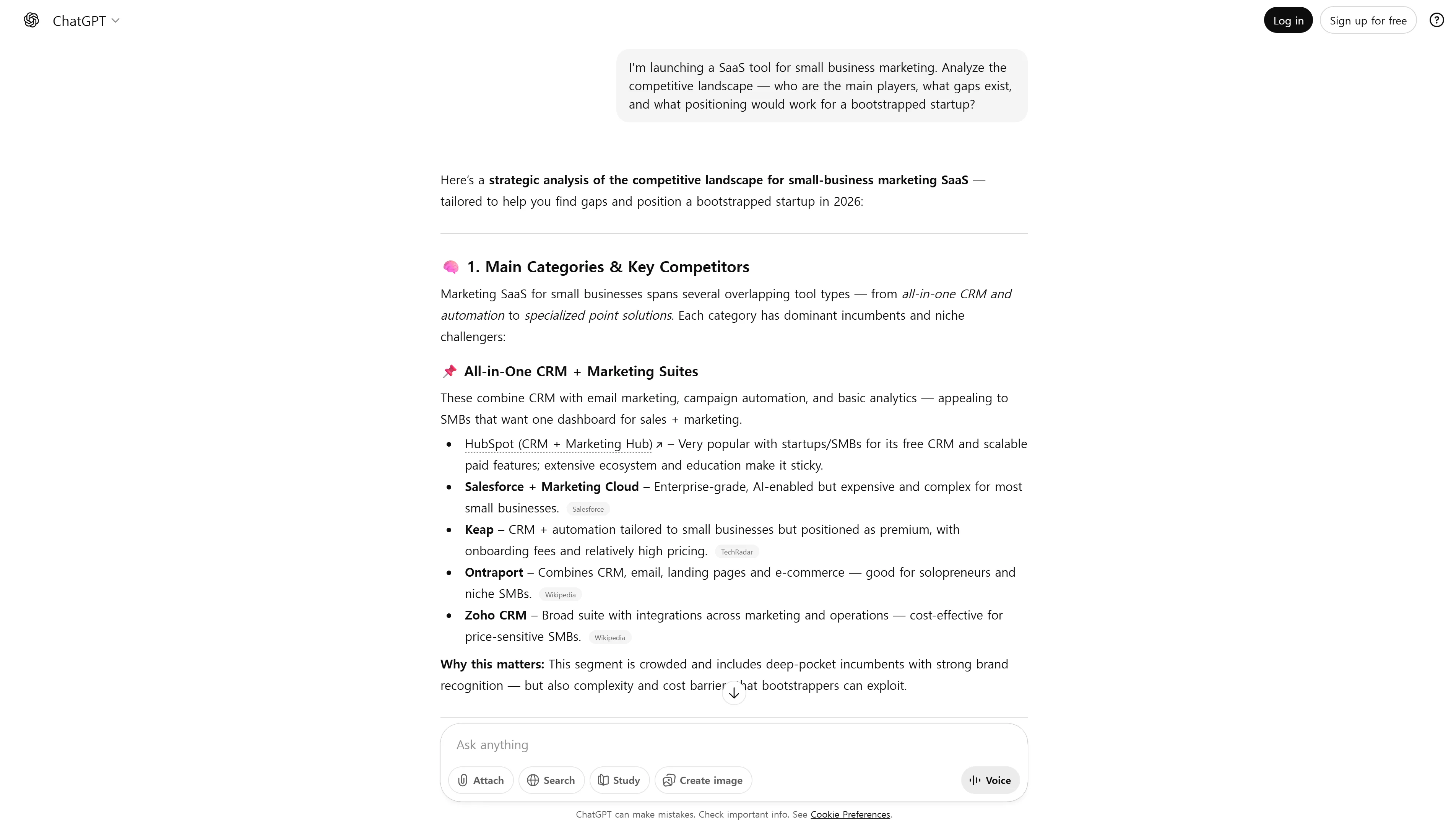
This might seem obvious, but ChatGPT (and similar LLMs) has become one of the most practical AI tools for market research at startups. Not for generating primary data — but for analyzing and synthesizing it.
What it does well: Upload survey responses, customer interview transcripts, or competitor content, and ChatGPT can summarize themes, identify patterns, extract quotes, and draft reports. It's also useful for brainstorming research questions, analyzing review data, and creating customer personas from qualitative inputs.
Pricing: Free tier available. Plus plan at $20/month. Team plan at $30/user/month.
Free plan limits: The free version provides access to GPT-5 with usage caps. For most startup research tasks, the free tier or Plus plan is sufficient.
Limitations: ChatGPT doesn't have access to proprietary data (your competitors' internal metrics, private social conversations). It can hallucinate statistics if you're not careful. Always verify any factual claims it generates.
Best for: Solo founders and small teams who need a flexible research assistant without learning a new platform.
7. Consensus — Best for Research-Backed Market Validation
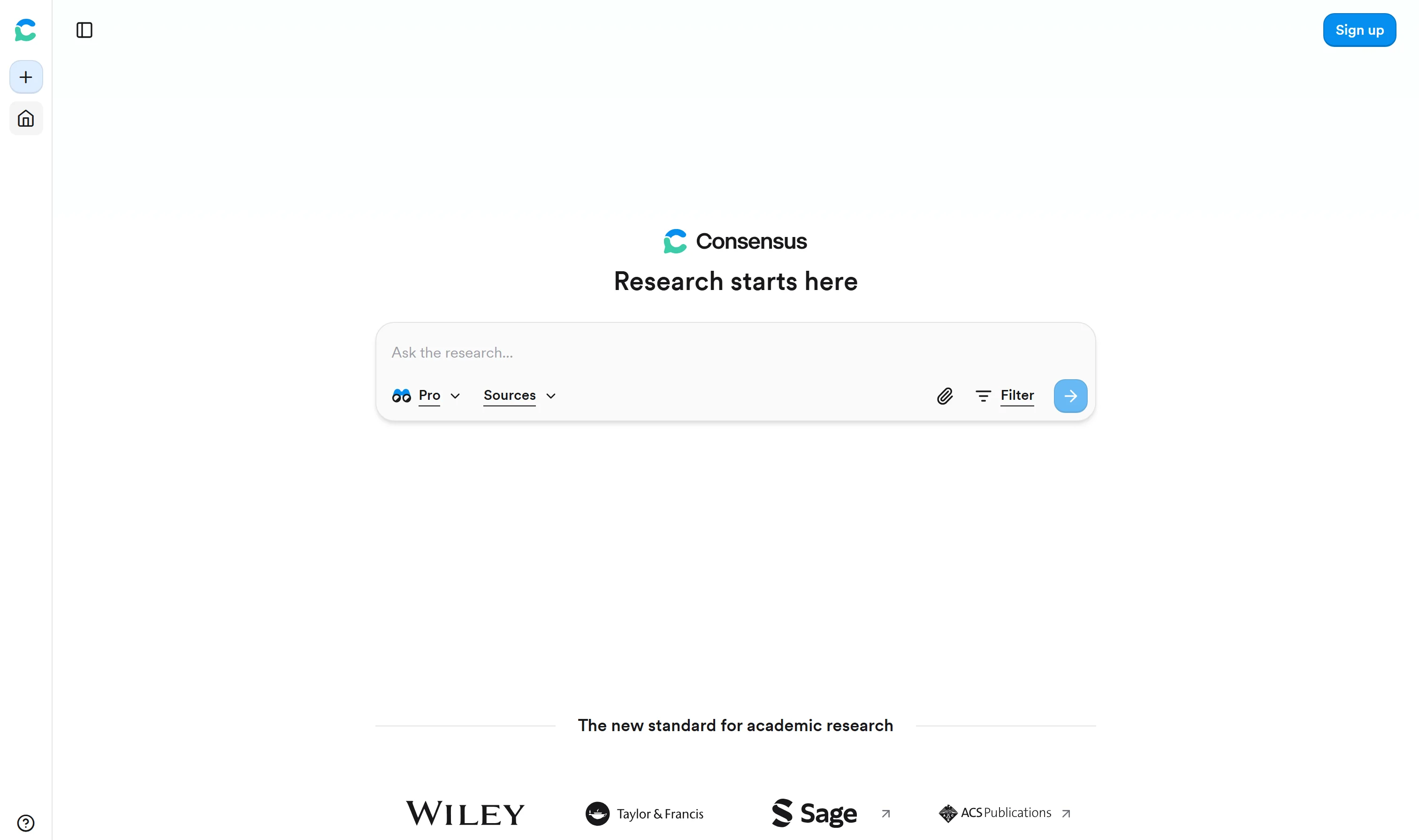
Consensus is an AI search engine built specifically for academic research. It scans over 200 million peer-reviewed papers and provides evidence-based answers with citations.
What it does well: If you need to validate a market hypothesis with published research — "Is demand for remote work tools growing?" or "Do consumers prefer subscription models?" — Consensus gives you answers backed by actual studies. It includes a Consensus Meter that shows how many papers agree or disagree with a claim.
Pricing: Free plan with limited searches. Premium at $8.99/month with unlimited searches.
Free plan limits: A few searches per day. Enough for occasional research validation but not for heavy daily use.
Best for: Founders preparing pitch decks, writing content backed by data, or validating market assumptions before committing resources.
Quick Comparison
| Tool | Best For | Free Plan | Paid From | Startup Fit |
|---|---|---|---|---|
| Crayon | Competitor tracking | No | Custom | 2/5 (expensive) |
| SparkToro | Audience research | Yes (5/month) | $50/month | 4/5 |
| Exploding Topics | Trend discovery | Yes (limited) | $39/month | 3/5 |
| Google Trends | Market validation | Yes (full) | Free | 5/5 |
| Brandwatch | Social listening | No | ~$800/month | 1/5 (enterprise) |
| ChatGPT | Research synthesis | Yes | $20/month | 5/5 |
| Consensus | Academic validation | Yes (limited) | $8.99/month | 4/5 |
A Simple Market Research Stack for Startups
You don't need all 7 tools. Here's a practical stack based on budget:
Zero budget: Google Trends (validation) + ChatGPT free tier (synthesis) + Google Alerts (competitor monitoring). This combination covers the basics and costs nothing.
Under $50/month: Add SparkToro ($50/month) for audience research. This gives you a clear picture of where your customers spend time, which directly informs your content and channel strategy.
Under $100/month: Add Exploding Topics ($39/month) for trend discovery. Now you're validating demand, understanding your audience, and spotting emerging opportunities — all for under $100/month.
For a broader look at AI marketing tools beyond research, check out our guide to free AI tools for marketing.
Key Takeaways
- AI tools for market research let startups move fast — automating competitor monitoring, audience analysis, and trend discovery without hiring a research team.
- Start with free tools. Google Trends and ChatGPT cover more than you'd expect. Add paid tools only when you've outgrown the free options.
- Match the tool to your research need. Don't buy a social listening platform if your main question is "Is my market growing?" Use the comparison table to pick based on what you actually need to learn.
- Verify AI outputs. LLMs can generate plausible but incorrect information. Cross-reference any statistics or market claims with primary sources.
- A $50-$100/month stack handles 80% of startup research needs — SparkToro for audience, Exploding Topics for trends, Google Trends for validation, and ChatGPT for synthesis.