



SEO for Startup Companies: A 6-Step DIY Guide
Most SEO guides are written for marketing teams with dedicated budgets and full-time specialists. That's not your reality. As a startup founder, you're building the product, talking to customers, and trying to figure out growth — all at once. When you search "seo startup companies," you mostly find agency listings or 5,000-word guides that feel impossible to act on.
This guide is different. It's a focused, 6-step framework designed for startup companies that want to build organic traffic without hiring an agency or spending months learning SEO theory. Each step is actionable, uses free or low-cost tools, and is prioritized for maximum impact with minimum time investment.
Why SEO Matters More for Startup Companies Than You Think
At first glance, SEO seems stacked against startups. You have a brand-new domain with zero authority, no backlinks, and a tiny website. Established competitors have been building their presence for years.
But startup companies have a real advantage: speed and focus.
Large companies move slowly. They have layers of approval, legacy content, and broad strategies. Startup companies can target specific, low-competition keywords that bigger brands overlook. You can publish content faster, iterate based on data, and own niche topics before anyone else.
SEO also creates compounding returns. Unlike paid ads — where traffic stops the moment you stop paying — a blog post that ranks well can drive leads for months or years. For cash-strapped startups, this makes SEO one of the highest-ROI marketing channels available.
According to Google's SEO Starter Guide, the foundation of good SEO is creating helpful, people-first content. That's something any startup founder can do — you already understand your customers' problems better than anyone.
Step 1: Set Up Your SEO Foundation
Before writing a single word of content, get your technical basics in place. This takes about an hour and ensures search engines can actually find and index your site.
Set up Google Search Console (free). This is your direct line to Google. It shows which queries bring people to your site, which pages are indexed, and any technical issues Google finds. Verify your domain and submit your XML sitemap.
Install Google Analytics (free). This tracks who visits your site, how they got there, and what they do. You'll need this data to measure SEO progress.
Image credit: Google Search Console
Run a basic technical check. Make sure your site meets these minimum requirements:
| Check | Why It Matters | How to Test |
|---|---|---|
| Mobile-friendly | Google uses mobile-first indexing | PageSpeed Insights (includes mobile audit) |
| HTTPS enabled | Security is a ranking signal | Check for padlock in browser |
| Page speed under 3s | Slow pages lose visitors and rankings | PageSpeed Insights |
| XML sitemap exists | Helps Google discover your pages | Check yoursite.com/sitemap.xml |
Don't overthink this step. If your site loads fast, works on mobile, and is on HTTPS, your technical foundation is solid enough to start.
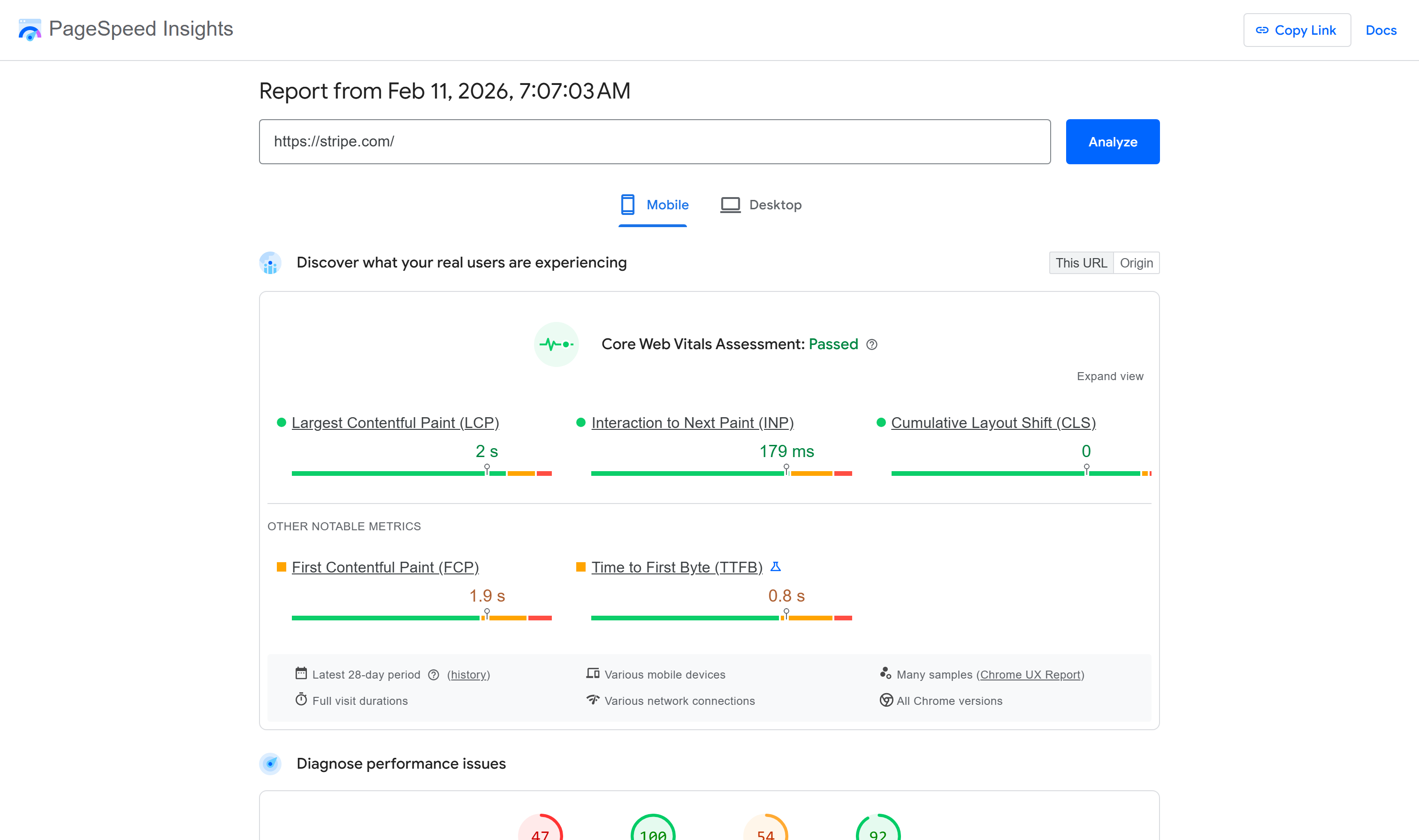
Image credit: Google PageSpeed Insights
Step 2: Find Keywords Your Startup Can Actually Rank For
This is where most SEO startup companies make their first mistake: they target high-volume keywords dominated by established brands. Trying to rank for "project management software" when Asana and Monday.com own the first page is a losing battle.
Instead, focus on long-tail keywords — longer, more specific phrases with lower competition.
How to find them (free methods):
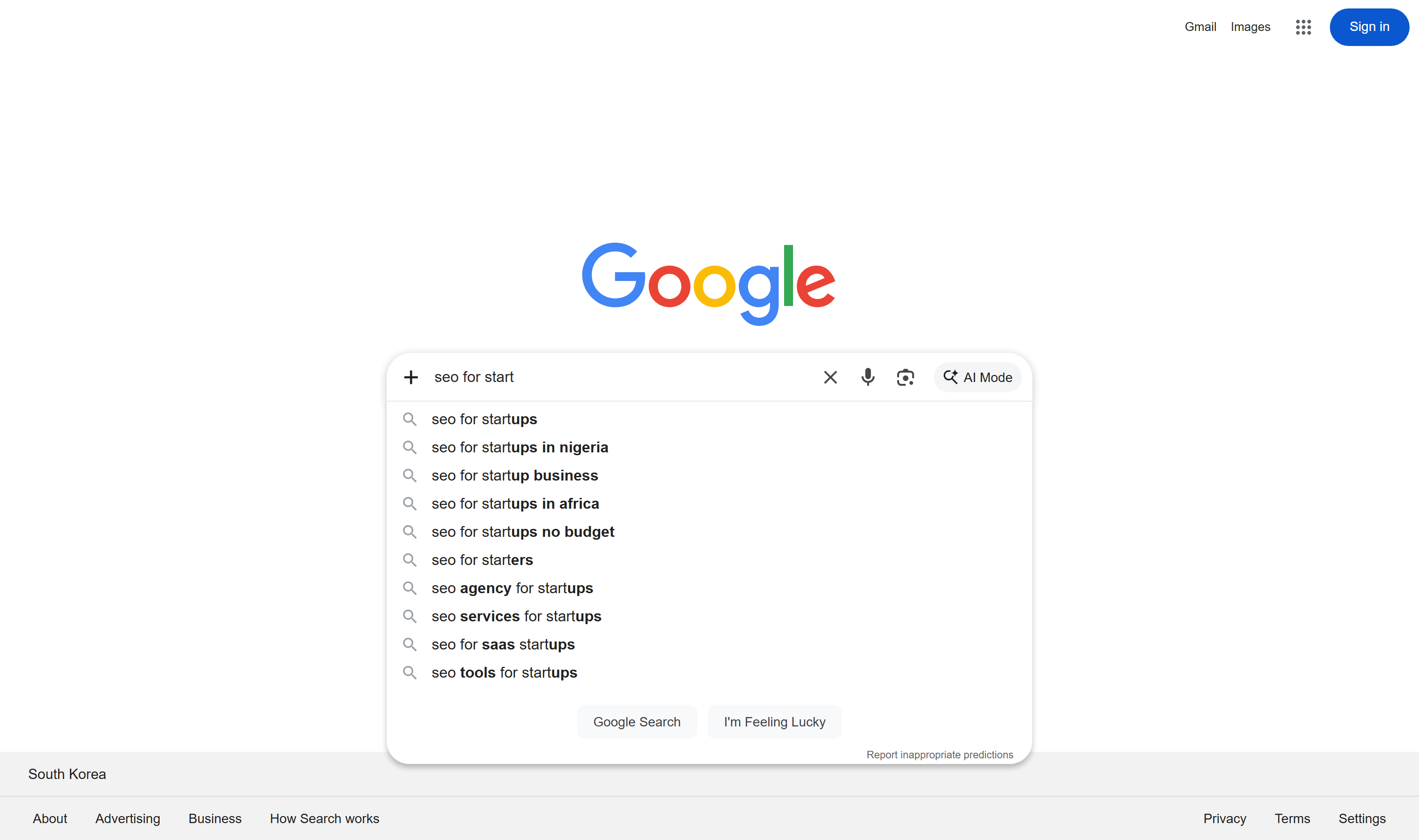
- Google Autocomplete. Start typing your topic in Google and note the suggestions. These are real queries people search for.
-
People Also Ask. Search your topic and expand the "People Also Ask" boxes. Each question is a potential blog post.
-
Google Search Console. If you have any existing traffic, check which queries already bring clicks. Look for terms where you rank on pages 2-3 — these are quick wins.
-
Reddit and community forums. Search your niche on Reddit. The exact phrases people use when asking questions are often great keyword targets.
The keyword selection framework:
| Factor | Target | Avoid |
|---|---|---|
| Word count | 3-5 words (long-tail) | 1-2 words (head terms) |
| Competition | Low to medium | High (dominated by big brands) |
| Search intent | Matches content you can create | Requires resources you don't have |
| Relevance | Directly related to your product space | Tangentially related |
Example: Instead of targeting "CRM software" (extremely competitive), a startup might target "simple CRM for freelancers" or "CRM for solo consultants" — specific enough to rank, relevant enough to attract potential customers.
Step 3: Create Content That Ranks and Converts
With your keywords selected, it's time to create content. For most startup companies, this means a combination of optimized landing pages and blog posts.
Start with 5-10 pages. You don't need hundreds of pages. Focus on:
- Your core landing pages (homepage, product page, pricing page) — optimized for your primary commercial keywords.
- 3-5 blog posts — each targeting one specific long-tail keyword, answering a question your potential customers are searching for.
One page, one primary keyword. Never target the same keyword with multiple pages. This causes keyword cannibalization, where your own pages compete against each other in search results.
Structure every page for readability:
- Use one H1 (the title) that includes your target keyword.
- Break content into H2 and H3 sections — never skip heading levels.
- Keep paragraphs to 2-4 sentences. Walls of text drive readers away.
- Use tables and lists for comparisons and multi-item information. Google often pulls these into featured snippets.
- Bold key terms and takeaways so readers can scan effectively.
Google emphasizes that content should demonstrate experience, expertise, authoritativeness, and trustworthiness. As a startup founder, your lived experience is your edge. Write about problems you've personally encountered, solutions you've tested, and insights from talking to real customers. That kind of first-hand knowledge is something generic SEO content can't replicate.
Step 4: Nail On-Page SEO Basics
On-page SEO is how you signal to search engines what each page is about. These are small optimizations that make a big difference in rankings.
Title tag (50-60 characters). This is what appears as the blue link in search results. Include your primary keyword near the beginning and make it compelling enough to click.
Meta description (150-160 characters). The snippet below the title in search results. It doesn't directly affect rankings, but a well-written description increases click-through rate, which does matter.
URL structure. Keep URLs short and descriptive. Use yoursite.com/crm-for-freelancers instead of yoursite.com/blog/post/12345?ref=cat2.
Image alt text. Describe every image with a short phrase that includes your keyword naturally. This helps with image search and accessibility.
Internal linking. Link between your pages where it makes sense. When you publish a new blog post, link back to your main landing pages and to related posts. This helps Google understand your site structure and distributes authority across pages.
| Element | Optimal | Common Mistake |
|---|---|---|
| Title tag | "Simple CRM for Freelancers — Manage Clients Easily" | "Blog Post #12 — Our Product" |
| Meta description | "Find the best simple CRM for freelancers. Compare features, pricing, and free options to manage clients." | Left blank or auto-generated |
| URL | /simple-crm-freelancers | /post?id=873&cat=blog |
| Alt text | "Dashboard showing freelancer CRM client overview" | "image1.png" |
Step 5: Build Authority With Backlinks
Backlinks — links from other websites to yours — remain one of the strongest ranking signals. But traditional link building (cold outreach to hundreds of sites) isn't realistic for most startup teams.
Here are backlink strategies that actually work for startup companies:
Get listed in startup directories. Product Hunt, Crunchbase, BetaList, and industry-specific directories provide legitimate backlinks and early exposure. Most are free to submit.
Build in public. Sharing your startup journey on X (Twitter), LinkedIn, or your blog naturally generates mentions and links. When people follow your story, they reference and link to your content organically.
Write one guest post per month. Find blogs in your niche that accept contributions. One quality guest post with a relevant backlink is worth more than dozens of low-quality directory submissions.
Create data or original insights. If you have access to any unique data — user surveys, industry benchmarks, original research — publish it. Data-driven content attracts links naturally because other writers need sources to cite.
What to avoid: Buying links, participating in link exchange schemes, or submitting to spammy directories. Google's algorithms are increasingly effective at detecting and penalizing manipulative link building.
Step 6: Track, Learn, and Iterate Monthly
SEO isn't a one-time project. It's a cycle of publishing, measuring, and improving. Set up a simple monthly review routine.
Track three core metrics:
- Organic traffic (Google Analytics → Acquisition → Organic Search) — Is overall search traffic growing?
- Keyword rankings (Google Search Console → Performance) — Are your target keywords moving up?
- Conversions from organic (set up goals in Analytics) — Are visitors taking the actions you want?
Monthly review checklist:
- Check Search Console for any new errors or indexing issues.
- Review your top-performing pages — can you update or expand them?
- Look at queries where you rank on page 2 (positions 11-20). These are your best opportunities for quick improvement.
- Publish 2-4 new pieces of content targeting your keyword list.
Set realistic timelines. For most SEO startup companies, it takes 3-6 months to see meaningful results. If you're targeting low-competition keywords and publishing consistent content, you should see early traction within 8-12 weeks. If after 6 months you're not seeing movement, it may be time to reassess your keyword strategy or consider hiring an SEO agency.
Key Takeaways
- Start with the foundation — Google Search Console and Analytics are free and non-negotiable. Get them set up on day one.
- Target keywords you can win — long-tail, low-competition terms that match your niche. Don't compete with enterprises for head terms.
- Publish focused content — 5-10 well-optimized pages beat 50 mediocre ones. One page per keyword, structured for readability.
- Get the on-page basics right — title tags, meta descriptions, URLs, and internal links. Small details compound into big ranking differences.
- Build links the startup way — directories, building in public, guest posting, and original data. Skip anything that feels manipulative.
- Review monthly, stay patient — SEO is a long game, but for startup companies willing to invest consistently, the compounding returns are hard to beat.